Construction Time-Lapse: How It Works and What It Costs
Fixed camera on a pole, or a drone flying the same route every week? A practical guide to both routes — what they cost, what the footage is actually for, and how to set one up so it doesn't disappoint.
AD
Adam Dankhazi
Founder & Chief Remote Pilot
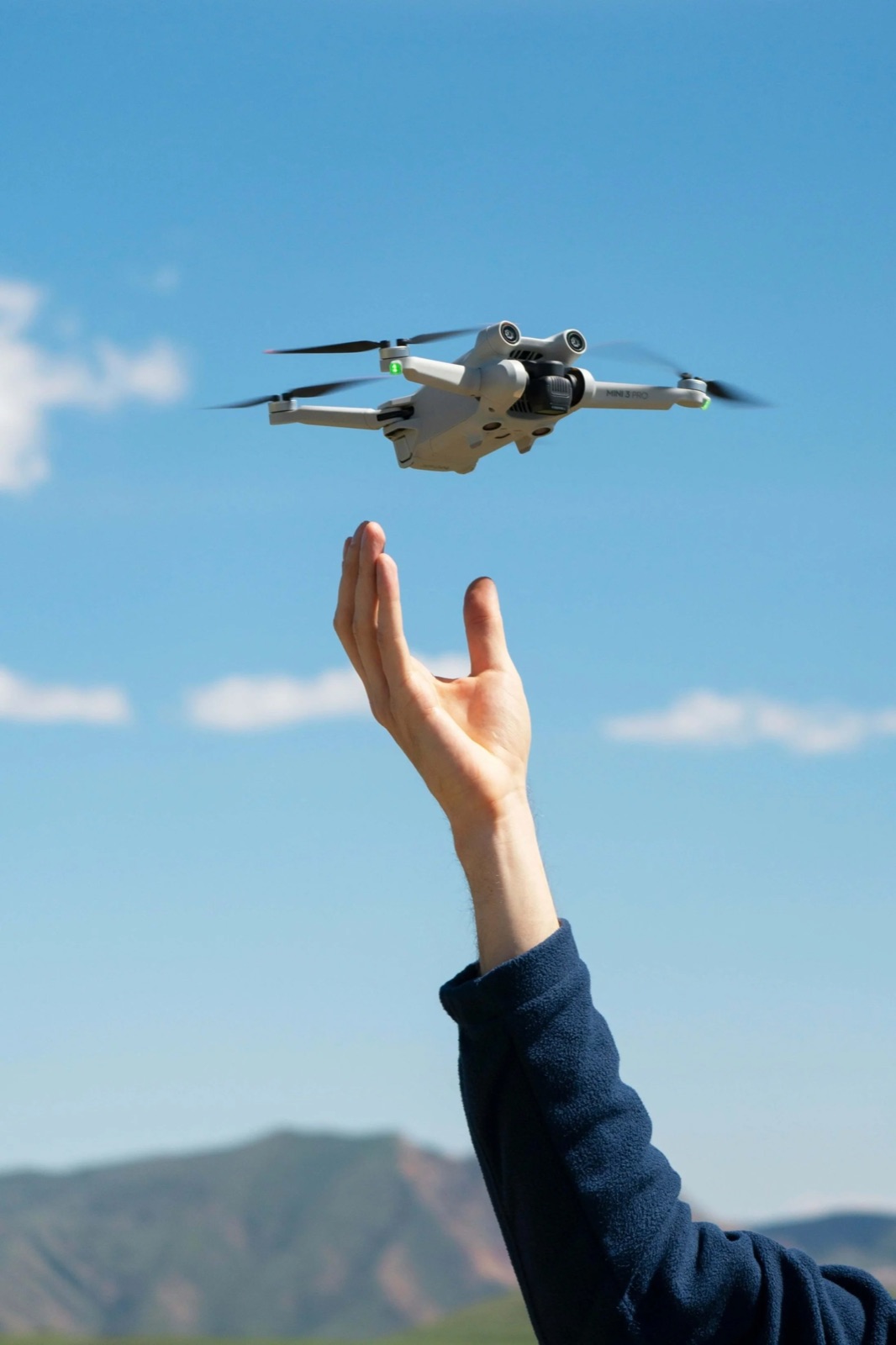
There are two ways to capture a construction time-lapse. You can mount a fixed camera on the site and let it shoot continuously for months, or you can fly a drone to the same locked vantage points on a schedule — same altitude, same angle, same time of day — and stack the visits into an aerial time-lapse. Which one fits depends on three things: how long the build runs, what you want to spend, and the story the finished video needs to tell.
Most guides on this topic are written by camera manufacturers, so they answer one question: which camera to buy. That's fair enough if you want to run the whole thing yourself. But if you're a developer, a contractor or an owner who just wants the footage — without owning hardware, swapping SD cards or editing anything — the useful comparison is different. This guide covers both routes: what each one involves, what each one costs, and what the people who commission time-lapses actually do with them.
What is a construction time-lapse?
A construction time-lapse is a video that compresses months or years of building work into a clip of one to three minutes. Photographs are taken at intervals — every few minutes for a fixed camera, every visit for a drone — and played back at normal video speed, so a foundation pour that took a week passes in a second and a house grows out of the ground in front of you.
One housekeeping note: you'll see it written as time lapse, timelapse and time-lapse. They're the same thing — we use the hyphen, and search engines treat all three identically.
The compression is the point. Nobody watches a construction site for six months, but everybody watches a sixty-second video of a building assembling itself. That makes a time-lapse one of the few deliverables that works equally well as a marketing asset, an investor update and a dated record of how the project actually went.
Fixed camera vs drone time-lapse
The fixed-camera route means buying or renting a weatherproof camera, mounting it on a pole, mast or neighbouring structure, powering it for the duration and pulling the images together at the end. The drone route means a licensed pilot flies the site on a schedule and captures the same framed shots each visit. Here's how they compare in practice:
Fixed camera
Drone time-lapse
Coverage & angle
One angle, fixed for the duration. More angles = more cameras.
Any angle, any altitude — multiple vantage points per visit, including top-down.
Setup cost
Camera, mount, housing and installation up front — before a single frame exists.
None. No hardware on site, nothing to install or insure.
Power & maintenance
Needs mains or solar power, storage, and someone to check it. A dead battery can silently lose weeks.
No on-site power. The pilot arrives charged; a missed frame is impossible to not notice.
Weather
Shoots through everything — including the dust, rain streaks and glare on the lens.
Flights are scheduled around weather, so every frame is a clean one.
Interior / exterior
Can cover interiors and shoots after dark.
Exterior and site-wide only.
Best for
One critical angle captured daily on long urban projects with power available.
Whole-site progress, marketing footage, and projects where the time-lapse rides along with monitoring.
The honest summary: if you need one angle recorded every single day for two years, a fixed camera earns its keep. For most residential and mid-size commercial projects in Cyprus, the drone route wins on flexibility and total cost — especially because the flights usually serve a second purpose, which we'll get to.
How a drone time-lapse works
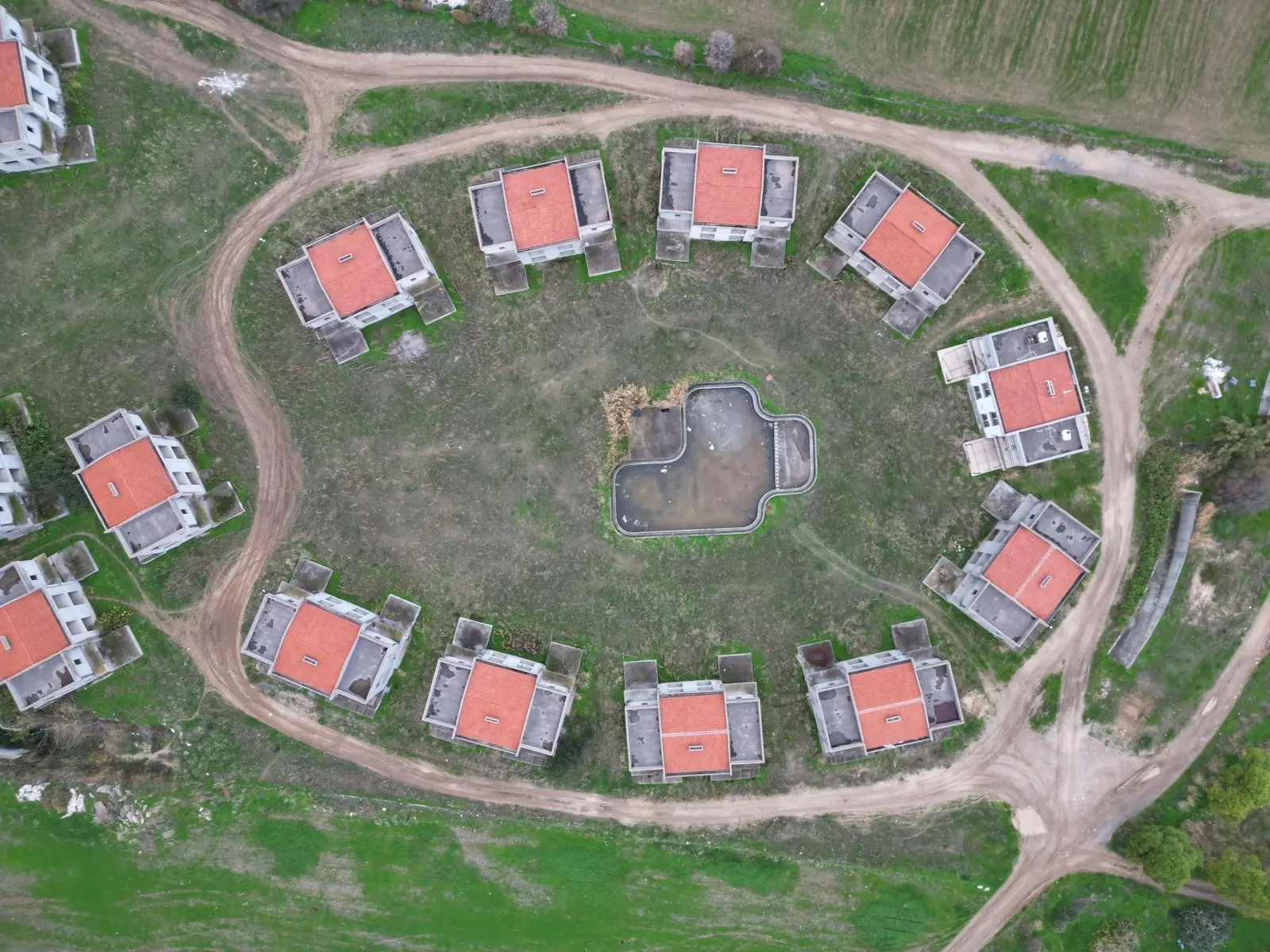
The method is discipline, not technology. On the Cyprus sites we monitor, we log our vantage points on the first visit — GPS position, altitude, camera angle, focal length — and save them as a flight plan, because we've learned the hard way that a vantage point you improvise a month in never quite lines up with the ones before it. Every visit after that, the drone returns to exactly those points and takes exactly those shots, at a consistent time of day so the shadows fall the same way.
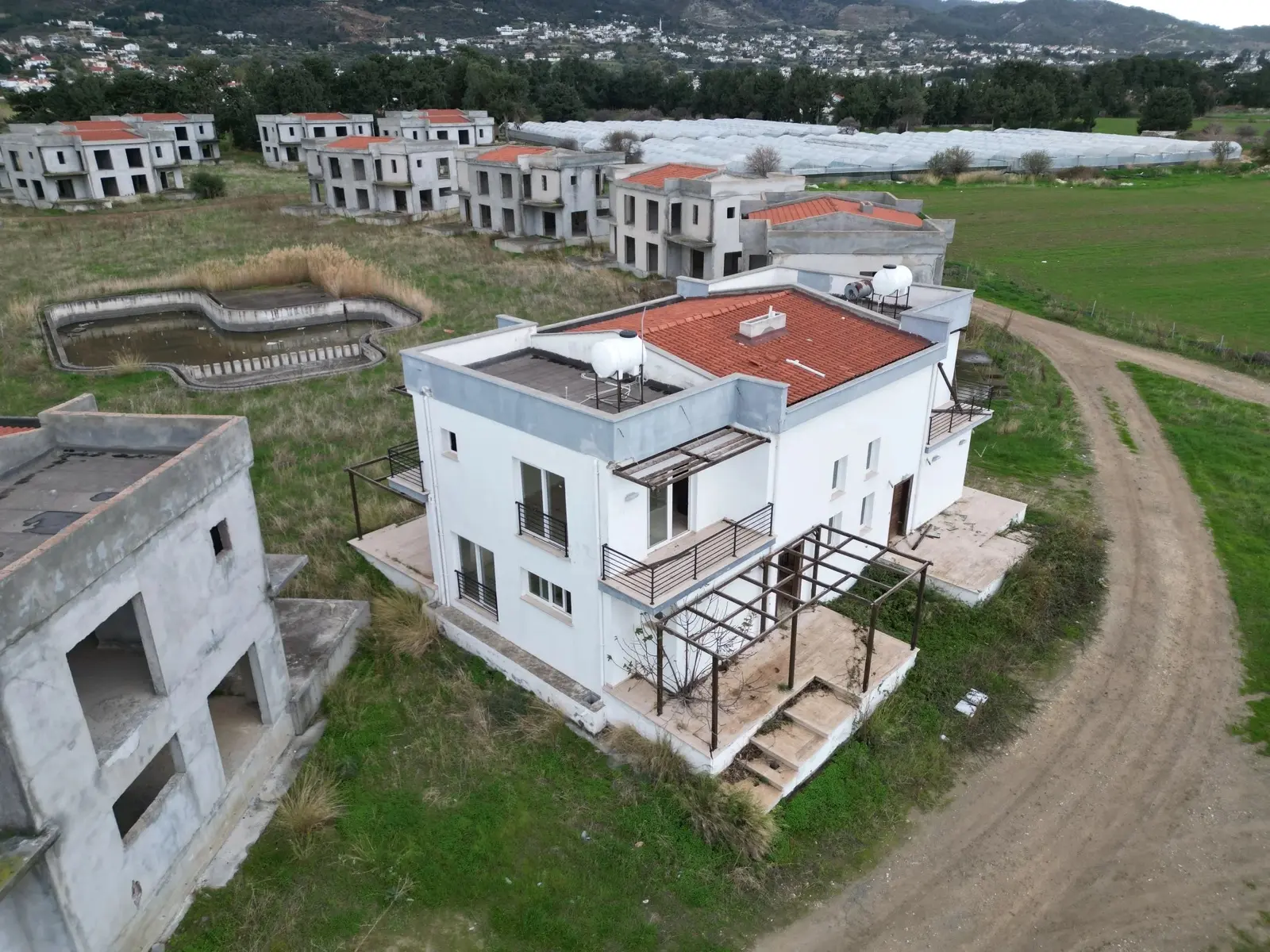
Repeat that weekly for eight months and you have a sequence of frames that line up almost perfectly. In our experience the shots that stack into a clean time-lapse are the boring, repeatable ones — not the dramatic angle you shoot once and never match again. Graded and assembled, the months stack into a time-lapse: the excavation fills, the frame rises, the roof closes, the render goes on, the pool turns blue.
A time-lapse isn't shot at the end of a project. It's shot on day one, when you decide where the camera will be for the next year — everything after that is just showing up.
— our rule for every monitoring plan
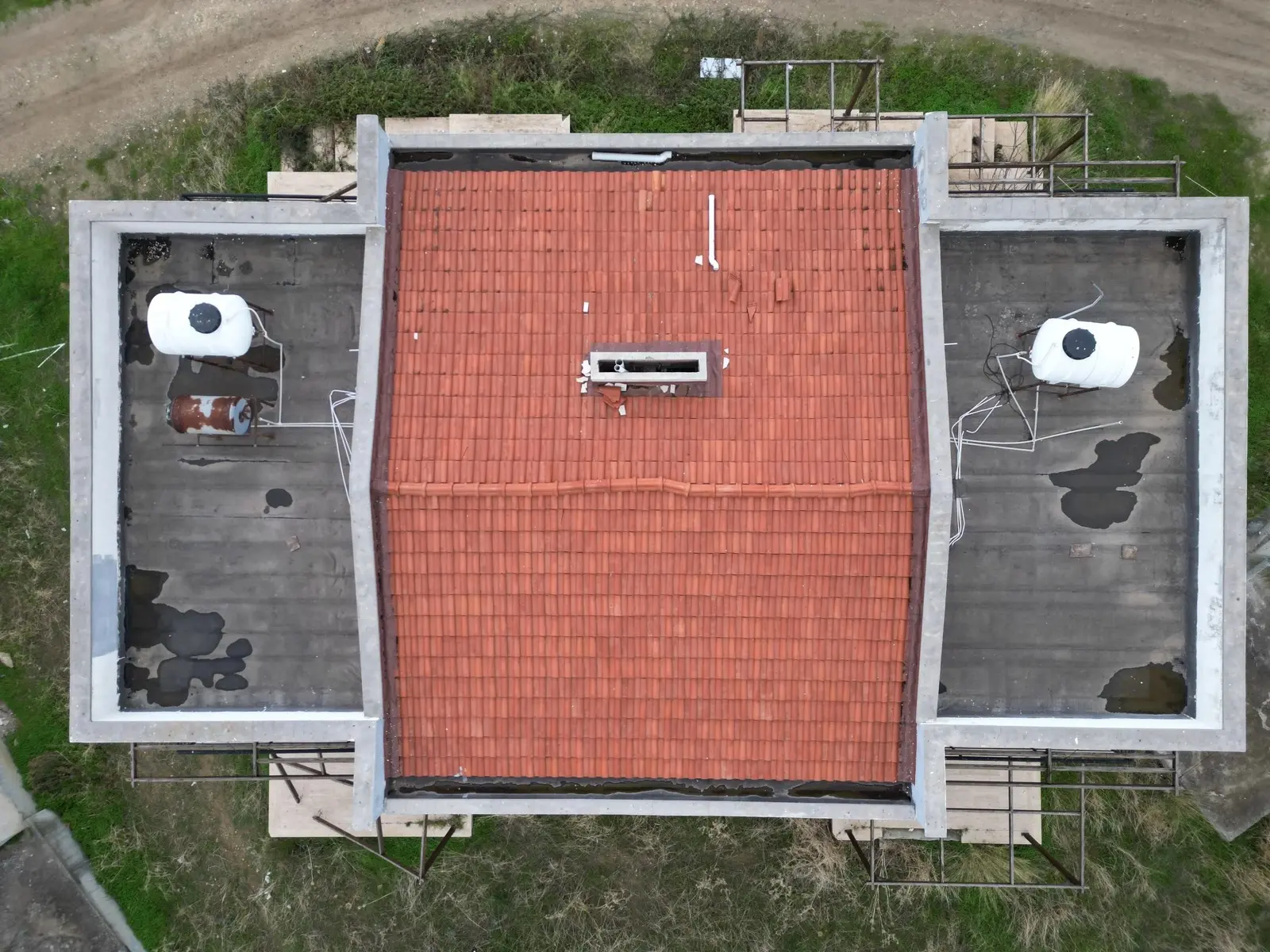
This is also why the drone route is rarely a standalone product for us. The flights that build the time-lapse are the same flights that produce progress reports for owners building remotely — the wide establishing shots, the paired before/after frames, the close-range detail. The time-lapse is what those frames become when you put eight months of them end to end.
The same vantage point, every visit. When two frames line up perfectly, the eye reads the change instantly.
What does a construction time-lapse cost?
There are two budgets to compare: buying hardware and buying an outcome.
The hardware route
Going by what the camera vendors themselves publish, a basic weatherproof IP camera capable of interval shooting starts at around a hundred euros, purpose-built time-lapse cameras sit in the low-to-mid hundreds, and professional solar-powered, cellular-connected construction camera systems run into the thousands — often with a monthly cloud subscription on top. Then add the parts the product pages don't dwell on: a mast or mounting point, power (mains or solar), someone to check the camera is still alive, storage for hundreds of thousands of frames, and editing at the end. None of it is exotic, but it's a project you now own for the length of the build.
The service route
The alternative is to buy the footage, not the camera. Our residential construction monitoring plan is €299 per month at launch pricing and includes four flights a month with 4K video and graded stills from locked vantage points. The time-lapse assembles itself from that footage as the months accumulate — there's no separate time-lapse fee, because it's a by-product of monitoring most owners want anyway. If you only need occasional coverage, single flights are €129.
Framed that way, the comparison isn't really camera-versus-drone. It's "own a hardware project for a year" versus "receive a monthly report and end up with a time-lapse at handover".
The short version
Fixed camera: pay up front for hardware, power and upkeep, get one angle shot continuously. Drone service: pay monthly (€299 at launch, four flights included), get whole-site coverage, progress reports, and a time-lapse that builds itself from footage you needed anyway.
— CyprusDroneX · Construction monitoring & time-lapse
Want a time-lapse of your Cyprus build?
Our monitoring flights capture the same locked frames every visit — the time-lapse is a by-product of updates you already want, from €129 a flight.
What developers and owners actually use time-lapses for
The finished video is rarely just a nice thing to have. Four uses come up on nearly every project:
Marketing and pre-sales. A development that visibly grows on a project page or social feed sells differently from one represented by a render. The developers we fly for use time-lapse clips to show momentum to buyers who are deciding between off-plan projects — proof that this one is actually being built.
Investor and lender updates. A sixty-second clip communicates eight months of progress faster than any written report, and it doesn't need translating. For funds and private lenders releasing money in stages, it's the update that gets watched.
A dated record for disputes. Every frame in the sequence is timestamped and consistently framed. If a disagreement arises about when the roof went on, how long the site sat idle, or what state the work was in at a payment milestone, the archive answers it. It's frequently the only independent record of the build that exists.
Milestone verification. Owners building from abroad use the same frames to confirm that claimed progress is real progress before releasing stage payments — the time-lapse is the long view of the same evidence. It pairs naturally with a drone survey at key stages when measurements, not just images, are needed.
The flights that build the time-lapse are the same flights that produce the monthly progress report.
How to set one up so it doesn't disappoint
Most disappointing time-lapses fail in the first week, not the last — nearly every recovery job we've been called in to rescue traces back to a decision made before the second visit. Whether you go fixed camera or drone, the checklist is the same:
Lock the vantage points on day one. The single biggest failure is moving the camera — or the drone position — mid-project. Choose positions that will still see the building when it's at full height, and never touch them again.
Plan the end-frame first. Decide what the final shot of the finished building should look like, then work backwards. The best last frame determines where every earlier frame is taken from.
Shoot wider than you think you need. Cranes arrive, scaffolding grows, and a frame that felt generous in month one gets crowded by month six. You can crop in later; you can't invent pixels you didn't capture.
Keep the light consistent. Same time of day, every visit. Shadows that swing wildly between frames make even perfect alignment look jumpy.
Keep every raw file. The time-lapse is one output. The dated archive behind it — full-resolution, timestamped originals — is the asset you'll want if a dispute or a marketing request shows up in year three.
A live example
The clearest way to see the method is a real project. This weekly report from week 49 of a residential build shows the locked vantage points in action — the same framing, week after week, gradually accumulating into the sequence the time-lapse is cut from. What reads as one report in isolation becomes one frame of the film.
Frequently asked questions
How much does a construction time-lapse cost?
Hardware route: from around a hundred euros for a basic weatherproof camera to several thousand for a solar-powered cellular system, usually with a monthly cloud subscription — plus mounting, power, maintenance and editing. Service route: our monitoring plan is €299 per month at launch pricing, including four flights with 4K video and stills, and the time-lapse is built from that footage at no extra cost. Single flights are €129.
How often should photos be taken?
A fixed camera typically shoots every few minutes during working hours. For a drone time-lapse, weekly flights suit fast-moving phases like structure and roofing; fortnightly or monthly is enough for slower phases. Consistency beats frequency — the same angle, altitude and time of day matters more than the number of visits.
Drone or fixed camera — which is better?
Fixed camera if you need one continuous angle every day, interior coverage, or after-dark capture. Drone if you want the whole site from multiple angles, have no power or mounting point, or want the time-lapse as a by-product of progress monitoring. Large projects often run both.
How long can a time-lapse run?
As long as the build — months or years. A fixed camera has to survive, stay powered and stay pointed the right way for the whole period. A drone time-lapse leaves nothing on site, so it runs for as long as the flights continue and can pause and resume with the project.
Can I use time-lapse footage in a dispute?
The dated, consistently framed archive behind a time-lapse is a factual record of what the site looked like on each date, and owners use it to evidence progress, delays and the state of work at payment milestones. We're not lawyers — confirm admissibility with yours — but a timestamped visual record has never weakened anyone's position.
Do I need permission to film a site?
You need the owner's or developer's consent to document the project, and in Cyprus drone flights must be flown by a licensed operator under EASA rules, with airspace permissions where required. When we run a time-lapse, the aviation side — licensing, insurance, flight permissions — is handled as part of the service. If you're planning one, tell us about the site and we'll confirm what applies to your location.
Close-range imaging that finds the crack before it finds you.
Want a time-lapse of your build?
See how our monitoring flights turn locked-frame visits into a time-lapse that builds itself — from €129 a flight. Or tell us about your site and we'll send a proposal within one working day.