How a drone roof inspection works — no ladder required
What actually happens when a drone inspects your roof, what it can and can't find, what it costs, and how the report holds up with insurers — written for the person who owns the roof, not the person flying the drone.
AD
Adam Dankhazi
Founder & Chief Remote Pilot
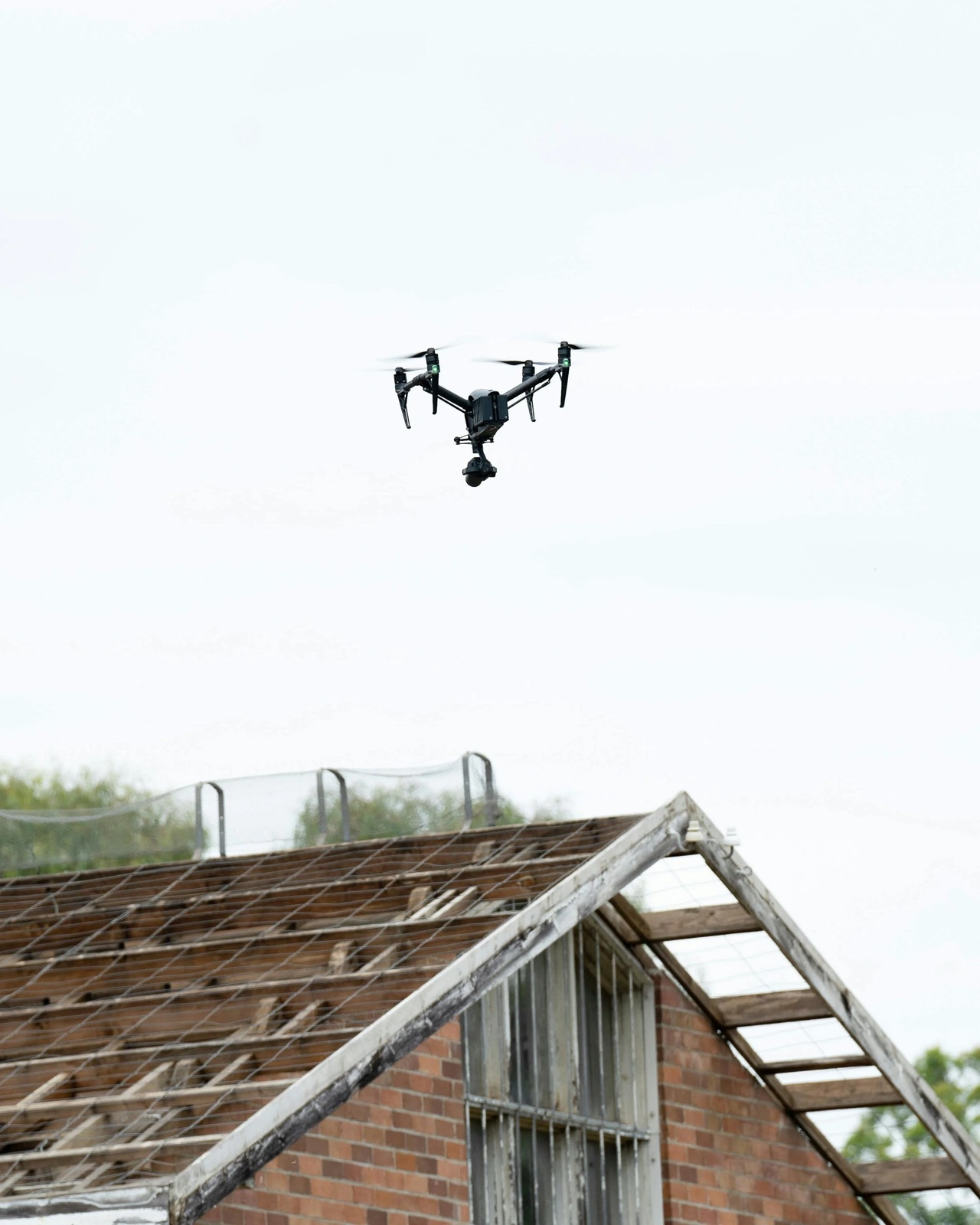
Here's the whole thing in one paragraph. A drone roof inspection is a licensed pilot flying a camera drone in a planned pattern over your roof, capturing 30–50+ high-resolution images that resolve detail down to roughly 2 cm — close enough to see a hairline crack in a tile, a lifted flashing or a blocked gutter outlet. Nobody climbs anything. Nobody leans a ladder against your gutter. The flight takes 20–45 minutes, the whole visit is typically done in under two hours, and you get a written photo report a couple of days later. Ours start from €149.
Almost everything else written about this subject is aimed at drone pilots who want to sell inspections, or at software companies selling to roofing contractors. This guide is for the other side of the transaction: the person who owns the roof and wants to know what they're actually buying. We fly these inspections every week across Cyprus, so the details below are how it really works — not how a brochure says it works.
Drone roof inspection or drone roof survey? Same thing, two names
One thing to clear up first, because it confuses people searching for the service. In the US (and mostly here in Cyprus) it's called a drone roof inspection. In the UK the same service is usually called a drone roof survey. There is no technical difference — both mean a drone photographing your roof systematically so a human can assess its condition from the images. We'll use both terms in this guide, because they're interchangeable. If a company quotes you for a "survey" and another for an "inspection", you're comparing like with like; compare the deliverables and the price instead.
What happens on the day, step by step
A proper drone roof survey isn't just someone turning up and flying around. Here's the sequence we follow, which is broadly what any competent operator should do:
1. A short consultation before we come. We ask what prompted the inspection — a leak, a storm, a purchase, routine peace of mind — and confirm the address, roof type and any obvious hazards like overhead cables or tall trees. This shapes where the camera spends its time.
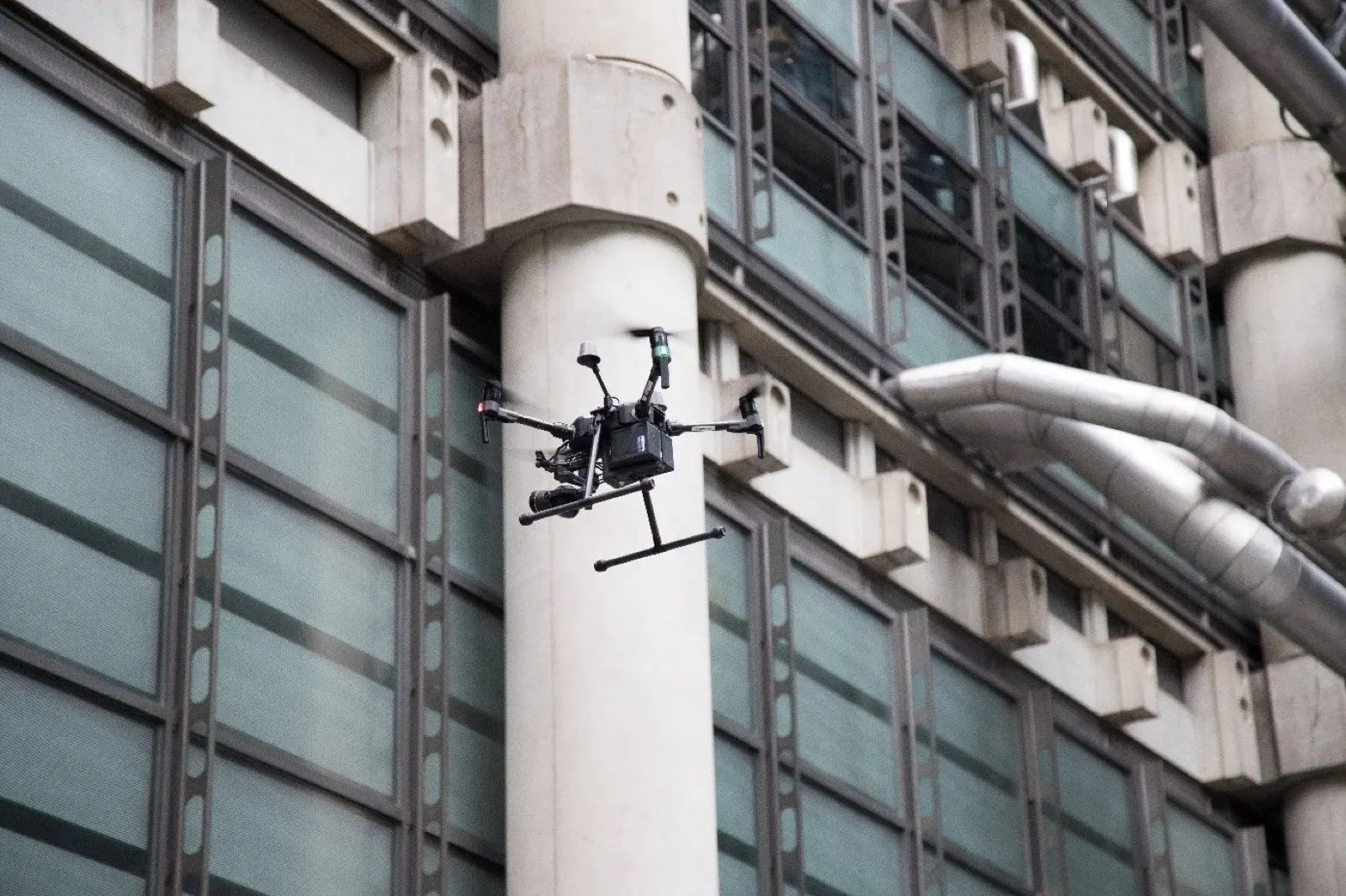
2. A flight plan, not freestyle flying. Before take-off we plan a pattern: an overview pass of the whole roof, then systematic closer passes of each slope, the ridges, the valleys, the flashings and every penetration — chimneys, vents, aerials, solar mounts. A planned pattern is what guarantees full coverage; freestyle flying is how corners of a roof get missed.
3. The flight itself: 20–45 minutes. For a typical house the drone is in the air for well under an hour. Larger or more complex roofs, or a house plus outbuildings, take longer. You're welcome to watch — most people do, because seeing your own roof on the controller screen is genuinely interesting.
4. Processing and review. Back at the desk, we go through every frame at full resolution, flag defects, and annotate the images so you can see exactly what we're pointing at and where it sits on the roof.
5. Your report, within 48–72 hours. You receive a PDF with the annotated photos, a plain-English summary of what we found, and a severity steer on each item — what's cosmetic, what needs a roofer this month, and what can wait. Express 24-hour delivery is available if you're up against a deadline.
How to prepare for a drone roof survey
Very little is needed from you, but four small things make the visit smoother:
Access: we need to reach a safe take-off spot on or beside your property — a garden, driveway or courtyard is ideal. Unlock the gate.
Parking: somewhere nearby for a car with equipment. Nothing exotic.
Pets: keep dogs indoors during the flight. Drones and dogs have strong opinions about each other.
Neighbours: a quick heads-up avoids anyone worrying about a drone near their boundary. We fly over your property, but a friendly warning costs nothing.
You don't need to be home (see the FAQ below), and you don't need to move anything on the roof itself.
Close-range passes capture each slope, ridge and flashing in sequence — the planned pattern is what guarantees nothing gets missed.
What problems can a drone actually find?
At ~2 cm detail, a drone camera sees more of your roof than you could ever safely see from a ladder, and it sees all of it, not just the slope facing the garden. We tell owners the drone gets us roughly 2 cm of detail, which is enough to pick out a hairline crack running through a single tile. The failures we spot most from the air are slipped tiles and cracked flashing — rarely the dramatic hole people expect, more often a small fault that has been quietly letting water in for a season. On a typical inspection we're looking for:
Cracked, slipped or missing tiles — including hairline cracks that are invisible from the ground but leak in the first heavy rain.
Failed flashings and ridge lines — lifted lead, cracked mortar bedding, gaps around chimneys and walls. Flashings are where most leaks actually start.
Blocked gutters and outlets — vegetation, debris and sediment you'd otherwise discover only when water goes where it shouldn't.
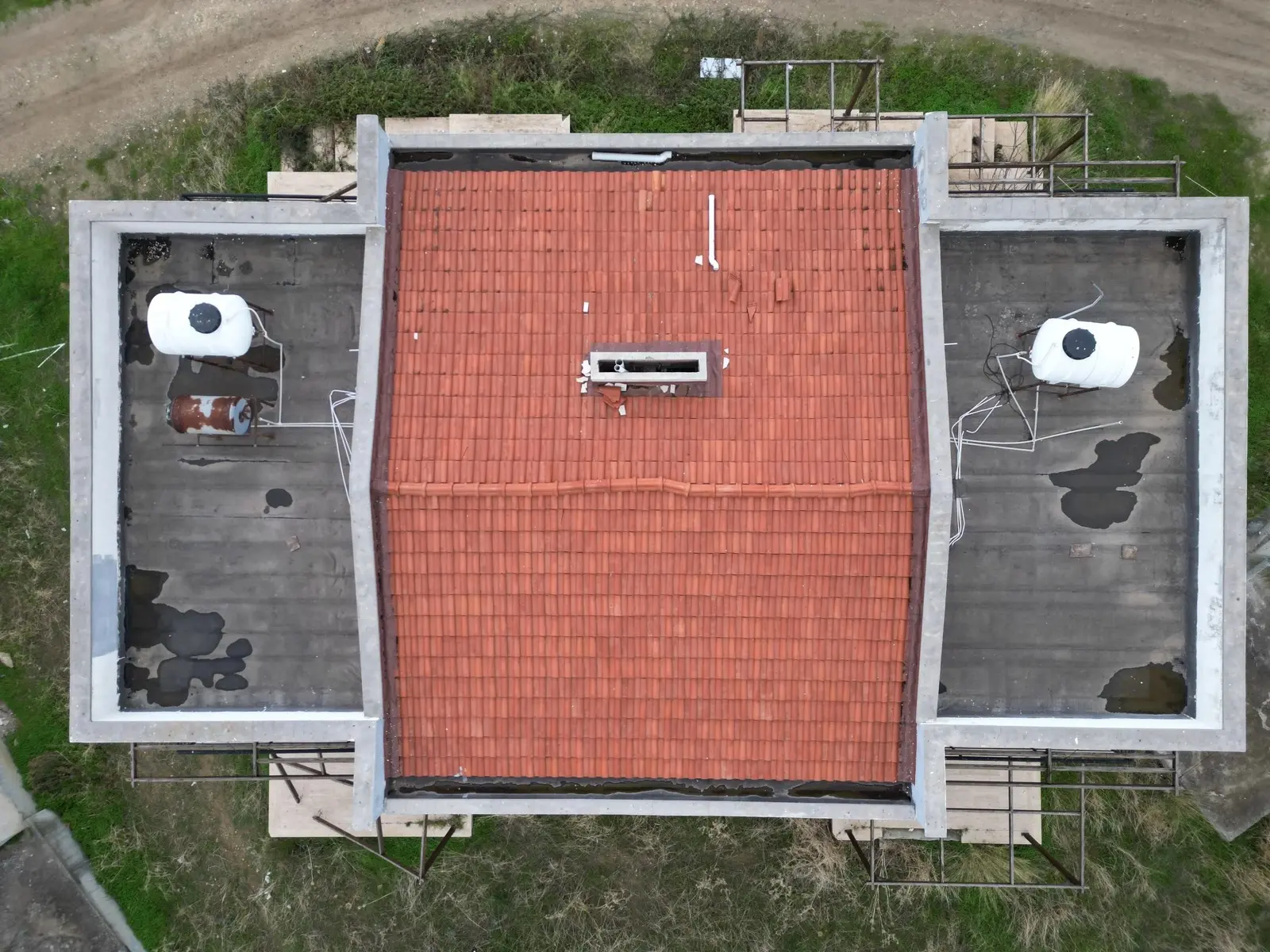
Ponding on flat roofs — standing water, blistered membrane, cracked seams. Flat roofs photograph beautifully from directly overhead.
Storm damage — displaced tiles, torn membrane, debris impact, damage to aerials and mounts, all documented with a date stamp.
Solar panel condition — cracked glass, soiling, shading and slipped mounting hardware on panels and water heaters.
Where a suspected leak doesn't show visible damage, thermal imaging can help: trapped moisture holds heat differently to dry structure, so wet insulation under a flat-roof membrane often shows up on an infrared camera when nothing looks wrong in daylight. It's not magic — thermal works best in the right conditions — but it finds problems a visual pass can't.
Drone vs ladder vs scaffold
The honest comparison, from someone who has stood under all three:
Drone inspection
Ladder inspection
Scaffold access
Safety
Nobody leaves the ground
Falls from ladders are among the most common serious home-maintenance accidents
Safe once built, but building it is work at height too
Cost
From €149
Cheap, but often bundled into a repair quote you can't verify
Hundreds to thousands of euros before anyone inspects anything
Time
Under 2 hours on site, report in 48–72h
An hour, but only for reachable areas
Days, including erection and dismantling
Detail
~2 cm resolution, every slope, repeatable and dated
Eyes-only, limited to what's visible from the ladder position
Full hands-on detail — the gold standard when touch matters
Disruption
Almost none — 45 minutes of quiet buzzing
Minimal, but ladders mark gutters and render
Your house wears a metal exoskeleton for days
The pattern is simple: a drone is the cheapest and safest way to find out whether and where you have a problem. Scaffold is what you put up when someone needs to fix it — and by then, the drone report tells the roofer exactly where to go, which shortens the scaffold hire too.
The most expensive roof inspection is the one you didn't do — a slipped tile is a €20 fix in October and a ceiling replacement in February.
— what we tell every client who asks if it's worth it
What does a drone roof inspection cost?
Our current launch pricing in Cyprus is deliberately simple:
Package
Launch price
What you get
Standard inspection
€149
Full visual drone inspection, 30+ high-resolution photos, written PDF report
Detailed inspection
€249
Photo + video coverage, 50+ annotated images, insurer-ready report structure
Those are launch rates — our standard pricing is double, so the early numbers won't last forever. For context, in the US a residential drone roof inspection typically runs somewhere between $100 and $300, with commercial jobs going well beyond $500; UK drone roof survey pricing sits in a similar band in sterling. Cyprus pricing is lower partly because we want it to be: at €149, checking your roof stops being a decision you agonise over. Full details are on our roof inspection service page, or just get in touch for a quote on anything non-standard.
The whole visit — arrival to pack-down — typically takes under two hours.
— CyprusDroneX · Roof & damage inspections
Need your roof checked — no ladder?
A licensed pilot flies your roof in under two hours; you get 30+ hi-res photos and a report in 48–72 hours, across Cyprus, from €149.
This is where a drone inspection quietly earns its fee several times over. When you claim for roof damage, the argument is rarely about whether the damage exists — it's about when it happened and what caused it. A drone report gives you dated, GPS-tagged, annotated photographs of specific damage, which is exactly the kind of evidence a claims assessor can work with. In our experience insurers accept a dated, annotated set of images because it matches the aerial imagery they increasingly rely on themselves — it's consistent, it's fast to review, and a professional drone report speaks their language.
The timing matters most after storms. Cyprus doesn't get many, but when a winter storm does come through, roofers and assessors are suddenly booked out for weeks. After a storm we're usually flying roofs within a day or two — before temporary repairs, weather or time muddy the picture. Our detailed €249 report tier is structured with exactly this use in mind. One caveat worth repeating: policies differ, so confirm with your insurer what they need. But in our experience, "here are 50 annotated, dated photographs of the damage" is a much stronger opening position than "the roofer says it looks bad".
When a drone isn't enough
We'd rather tell you this before you pay than after. A drone inspection is a visual assessment, and some problems don't show on the surface:
Internal leaks with no external symptom. If water is appearing on a ceiling but the roof photographs cleanly, the fault may be a pipe, condensation or a failure hidden under intact tiles. Thermal imaging narrows it down, but sometimes a roofer needs to lift tiles to find it.
Structural assessment. A drone can show you a sagging ridge line — it cannot tell you whether the timbers beneath are rotten or the sag is eighty years old and stable. That's a structural engineer's or building surveyor's call, made hands-on. If your question is about the building rather than just the roof, our guide to drone building surveys covers where aerial imaging fits into a fuller assessment.
In both cases the drone report still does useful work: it rules things out, pinpoints where the follow-up should focus, and gives the roofer or surveyor a map before they arrive. But it's a diagnostic tool, not a repair, and anyone who tells you a drone flight replaces every other kind of inspection is selling something.
How often should you inspect a roof?
Once a year, plus after any major storm. That's the whole answer. An annual inspection catches slow problems — creeping tile slippage, mortar erosion, gutter build-up — while they're still cheap, and a post-storm check catches the sudden ones while they're still claimable. In Cyprus the natural rhythm is an autumn inspection before the winter rains, which is exactly when a €149 flight is at its most valuable. If you're buying a property, add one more: a pre-purchase roof survey costs less than one hour of a lawyer's time and has changed more than one negotiation. (New to the wider topic? Start with what a drone survey is and when you need one.)
The short version
A licensed pilot flies a planned pattern over your roof and captures 30–50+ photos at ~2 cm detail — finding cracked tiles, failed flashings, blocked gutters and storm damage with nobody leaving the ground. Under two hours on site, report in 48–72 hours, from €149. Inspect annually and after storms; use the detailed report for insurance claims; call a roofer or surveyor when the problem is under the surface rather than on it.
Frequently asked questions
How much does a drone roof inspection cost?
With us, from €149 at launch pricing for a standard visual inspection (30+ photos and a PDF report), or €249 for the detailed insurer-ready version with video and 50+ annotated images. Our standard rates are double these launch prices. For comparison, US residential inspections typically cost $100–$300 and UK drone roof surveys sit in a similar sterling range.
How long does a drone roof inspection take?
The flight is 20–45 minutes for a typical house; the whole visit is usually under two hours. Your report arrives within 48–72 hours, or the next day with express delivery.
Is a drone roof survey worth it?
If your alternative is scaffold, the drone costs a small fraction of it. If your alternative is a free look from a roofer's ladder, the drone gives you independent, complete, dated evidence rather than an opinion attached to a repair quote. And if your alternative is doing nothing, see the blockquote above about February ceilings.
Can drones inspect flat roofs?
Yes — arguably better than any other method. A directly overhead pass shows ponding, blistering, seam cracks and blocked outlets across the whole surface at once, and thermal imaging can reveal moisture trapped under the membrane that no visual inspection would catch.
Will my insurer accept a drone report?
Insurers increasingly rely on aerial imagery for roof claims themselves, and dated, annotated photographic evidence of specific damage is exactly what assessors need. Confirm your policy's requirements, and choose the detailed report tier if the inspection is claim-related.
Do I need to be home?
No — we just need permission and access to a safe take-off point on the property. Many of our clients are overseas owners who receive the report by email without ever meeting the drone.
Honest numbers on aerial property shoots — packages, add-ons and what moves the price.
Worried about your roof?
See exactly what a drone roof inspection covers, what's in the report and what it costs — or send us the address and what prompted the check, and we'll confirm a flight slot and a fixed price within one working day.